
How I practice · Littleton, CO
Gentle first. More force only when your body needs it.
Most people expect a chiropractor to twist and crack. Most visits here involve no cracking at all.
If a bad experience, a physician’s warning, or just the sound of it has kept you away, this is exactly how I work, from the first visit on.
Questions first? 720-583-4686
What you may be expecting
Three things people assume about chiropractors.
You may expect
Every visit is twisting and cracking.
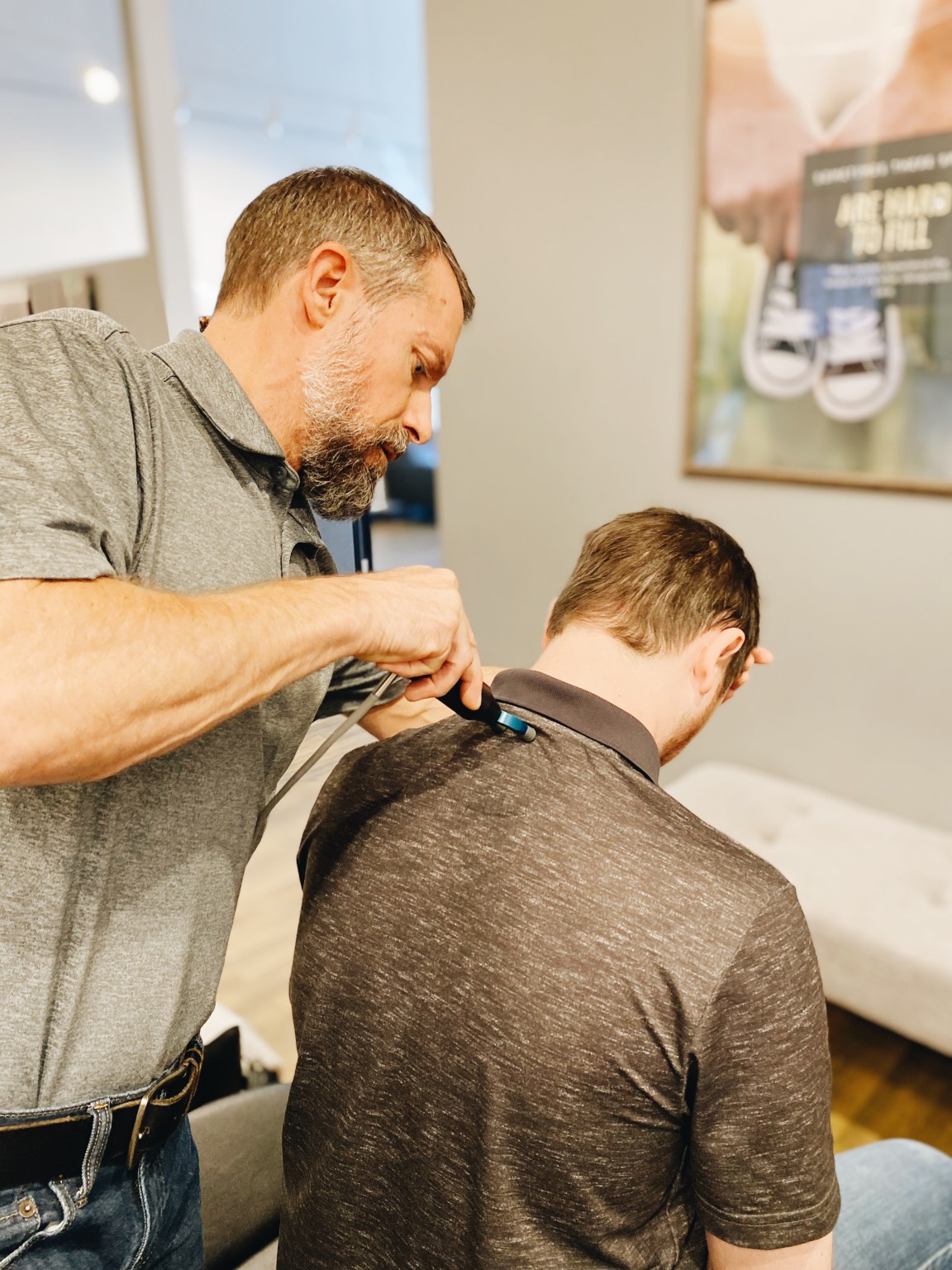
Most visits involve no manual adjustment and no cracking sound. Treatment starts with a precise, low-force handheld instrument.
You may expect
The crack is the treatment.
What matters is that your spinal bones are aligned and moving properly. That can happen without abrupt twisting or cranking.
You may expect
You’ll be sold a long package.
I schedule four weeks at a time. I’ll explain the full timeline I expect, but you’re never signed up for months in advance.
The escalation ladder
Treatment moves up only if your body needs it.
Where you sit on the ladder depends on how you respond and what you tolerate, not on a routine.
01
Instrument adjusting
A precise, low-force adjustment delivered with a handheld instrument. This is where treatment starts, for everyone.
02
Drop-table adjusting
A section of the table drops slightly as the adjustment is made, so less force is needed from me.
03
Manual manipulation
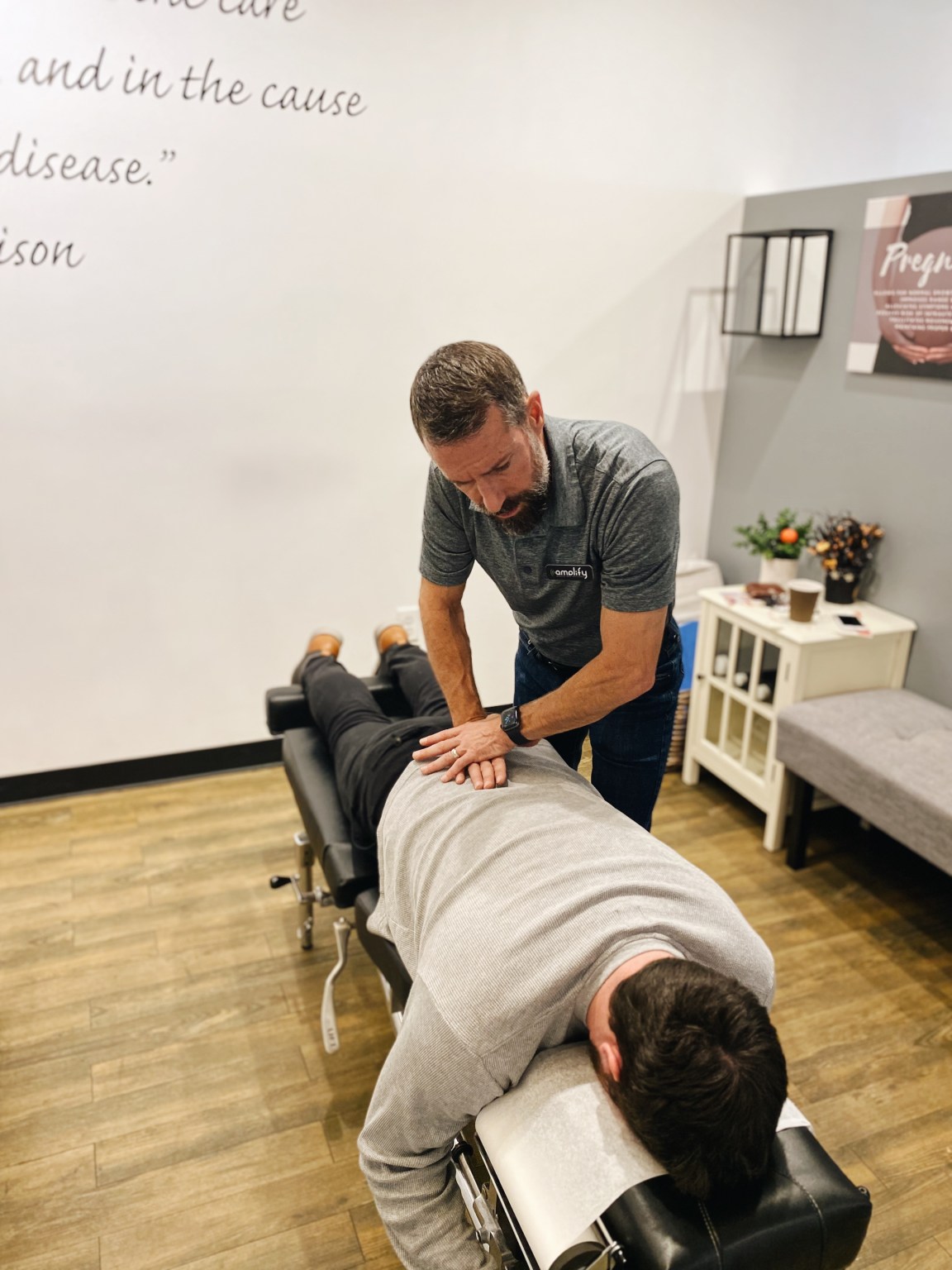
The traditional adjustment, with the sound most people picture. I use it only when it’s truly necessary, and I’ll tell you why and get your permission before I do.
25
Years
in practice
What 25 years changed.
Over 25 years in practice, I’ve found that forceful manipulation is needed less often than I once thought.
That’s a conclusion I came to the long way. For years I treated almost exclusively with manual manipulation. A couple of decades of physical adjusting took a toll on my own body, so I pivoted toward methods that didn’t beat me up as much.
What surprised me was that my patients’ outcomes stayed very similar. Only in rare cases did the gentler methods fail to get the result the patient was looking for, and those are the cases where I still use manual manipulation. It’s why I don’t crack nearly as much now as I did when I started.
That’s how I learned that spinal bones can be aligned and moving properly without abrupt twisting or cranking. So today I start with the gentlest methods, and I only move to more forceful ones when the gentler methods aren’t enough.
Getting started
Your first two visits.
Visit one
About 30 min
A full examination, plus X-rays of your spine taken here in the office. This is where I find out what’s actually driving your problem.
Visit two
About 30 min
Your report of findings: what I found, the treatment plan I’m proposing, the prognosis, and the full timeline I expect. You decide from there. If you agree with the plan, you can start care that same visit, or on a separate day if you’d prefer.
4
Weeks
at a time
One month booked at once. Never a long package.
At your report visit I’ll explain the full timeline I expect. But I only schedule four weeks at a time, so the approach can change if it isn’t working.
If there’s no meaningful change in your range of motion or symptoms within the first month, chiropractic probably isn’t the answer for you. I’ll tell you that directly and refer you to a specialist.
If muscular weakness turns out to be the main driver, I’ll suggest physical therapy alongside what we’re doing.
Why it’s just me
Why I made the practice smaller.
When I took over this practice in 2022, it was a bigger operation: more staff, more volume, and a schedule built to keep the tables full.
I didn’t want to process people. I wanted to know them: what they do for a living, what they’re trying to get back to, and how they’re actually doing from one visit to the next. That’s hard to do when the goal is seeing as many people as you can and getting through the day.
The volume model works, and plenty of good chiropractors run it well. I found I couldn’t know people the way I wanted to while doing it. So I made this practice smaller on purpose — every visit, from your first exam to your last adjustment, is with the doctor who examined you, and who cares more about what’s going on in your life and your health than about getting the treatment done and moving on to the next patient.
Next step
Book your first visit.
You can book your first visit online in a few minutes, or call 720-583-4686 to schedule.
Questions first? 720-583-4686